Building Things that Work
I think the best way to understand how something works is to try to build it yourself.
That is what drew me to coding. I have been learning at a coding school, where I work with MIT App Inventor, a platform that lets you build real mobile apps using block-based programming.
The thinking behind it is the same whether you are building something simple or something complex. You have to work out what triggers a point, what ends the game, what the restart resets and in what order.
Breaking a big idea into tiny logical steps, checking each one before moving to the next, is what I have come to love about computational thinking.
In 2024, my younger sister Ellis and I competed in the National Robotics Competition under the theme Water Heroes. We called our project Soak it Up: Sponge Cities. We started by asking a real question. Cities like Beijing draw so much water from the ground that the soil beneath them collapses and compacts. Beijing sinks four inches every year. When it rains heavily, the city floods. We wanted to understand why, and what could be done about it.
Our answer was sponge cities, urban areas redesigned with green spaces, permeable surfaces, plants and natural drainage so that the earth can absorb water again instead of letting it run off into floods.
We also proposed making rainwater harvesting compulsory for homes above a certain size, so that households could meet their own needs without drawing further on the ground.
Then we had to build a robot. We planned it together, drew rough models, chose our roles, selected parts, assembled the robot, and then spent hours writing code. We used modular coding and built in error handling so that the robot could manage multiple sensors and motors at the same time.
In-person and remote options
Our office is conveniently located in Manhattan. A place to gather, grow, and reconnect.
Our Services
Explore our range of services designed to help you move forward with confidence, wherever you're headed next.
Meet the Team
-
![A woman with short blond hair sitting on a cushioned bench, writing in a notebook. She wears a sleeveless orange top and beige pants. A large green houseplant with broad leaves is on her left, and a wooden slat wall is behind her. Sunlight creates a shadow of a window frame cast on the wall.]()
Monet Goode
FOUNDER
With a vision for building something meaningful, our founder brings a blend of big-picture thinking and hands-on experience.
They set the tone for everything we do. -
![A man with gray hair, wearing a blue sweater and beige pants, sitting on a bench against a plain beige wall, with his left hand resting on the bench and his right arm bent behind him, looking to his right.]()
Emmett Marsh
SALES MANAGER
Focused, approachable, and driven by results, our sales manager is all about building strong relationships. They help connect people to the right solutions—with clarity and care. -
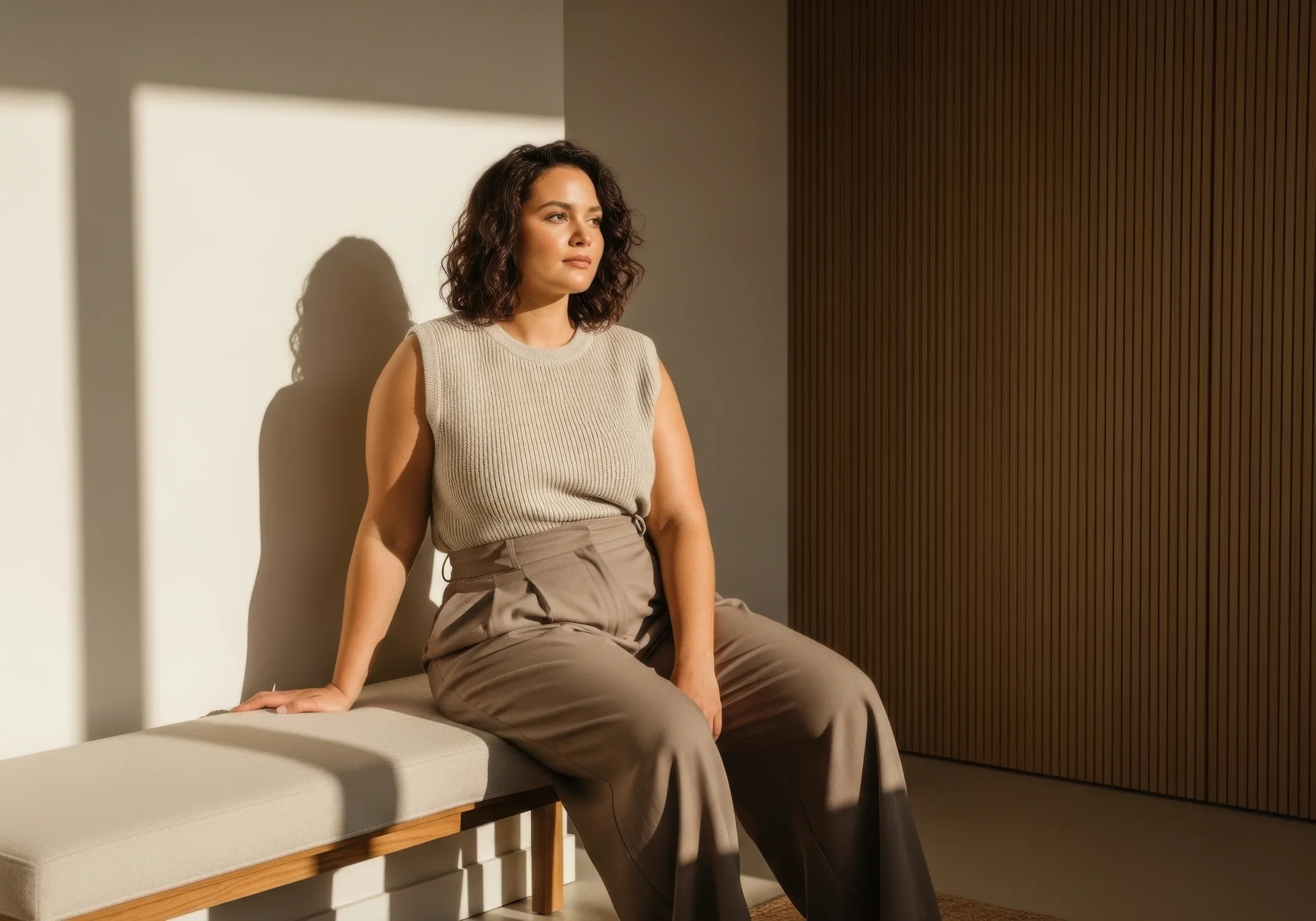
![A woman with dark curly hair sitting on a bench, wearing a beige sleeveless top and beige pants, in a room with beige and brown walls, natural lighting, and shadows cast across the wall.]()
Eleanor Parks
MARKETING DIRECTOR
Creative and strategic in equal measure, our marketing director brings fresh ideas to every campaign. They turn insights into action and help our message resonate with the right audience. -
![A young man with dark skin and short haircut sitting on a wooden bench in a room with plain walls, wearing a gray polo shirt and beige pants, looking to his left with a neutral expression.]()
Karl Holland
CUSTOMER SERVICE MANAGER
Friendly, attentive, and always ready to help, our customer service manager ensures every interaction is a positive one. They keep communication clear, timely, and human.